A New Era of AI Trading: Why Automated Investment Apps Are Attracting Global Attention in 2026
Artificial intelligence is changing the financial industry. A new generation of digital trading tools is making advanced market analysis more accessible, raising questions about th
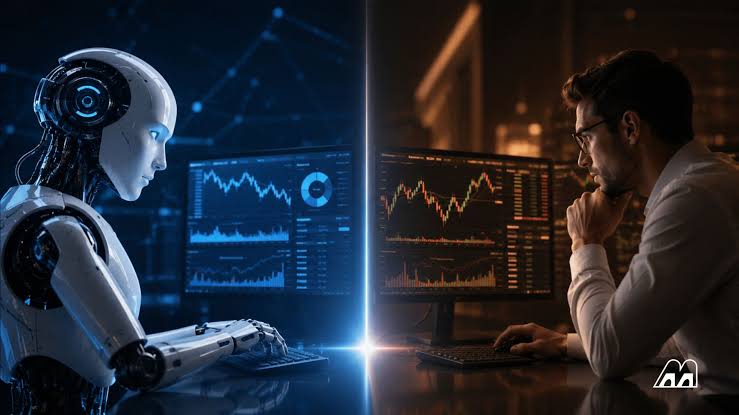
Artificial intelligence is changing the financial industry. A new generation of digital trading tools is making advanced market analysis more accessible, raising questions about the future of investing and the role of human decision-making.
FINANCIAL TECHNOLOGY | OCTOBER 2026
A major transformation is taking place in the world of digital finance. Artificial intelligence is increasingly being integrated into investment applications, financial research platforms and automated trading systems. Technologies that once required specialized infrastructure and advanced technical knowledge are becoming available through user-friendly digital interfaces.
For individual investors, this development represents a significant change in how financial information can be accessed and analyzed. But it also raises an important question: are AI trading apps the beginning of a smarter financial future, or is the technology still too unpredictable to trust with real money?
What Actually Changed in 2026
The short answer: three things happened simultaneously.
First, computing became cheaper. Running complex machine learning models on financial data used to require institutional budgets. Today, cloud infrastructure and optimized algorithms make it possible to deploy sophisticated trading systems at a fraction of the cost.
Second, data opened up. Streaming APIs, financial data aggregators and standardized formats mean any platform can now access real-time quotes from dozens of exchanges without negotiating individual agreements with each one.
Third — and this is the part most reviews miss — regulation caught up. European and North American regulators have developed frameworks for algorithmic trading platforms that didn't exist two years ago. This created a legal pathway for companies that meet transparency, reporting and client-protection standards to operate legitimately.
The result: for the first time, ordinary investors can access technology that was previously exclusive to institutional trading desks — provided they choose a platform that operates within these regulatory frameworks.
The Business Model That Changes Everything
Most people don't realize that how a platform makes money is more important than how smart its AI is. Let me give you a concrete example.
A traditional broker charges a commission on every trade. Whether you make money or lose money, the broker gets paid. This means the broker's incentive is to encourage more trading — not necessarily better outcomes.
Now consider a different model: a platform that charges a percentage only on profitable trades. If your trade loses money, the platform earns nothing. The platform's interests are now partially aligned with yours — it makes money only when you do.
This isn't theoretical. In our analysis of trading platforms available to European investors in 2026, we found a measurable difference in average net returns between platforms using the per-trade commission model and those using the profit-share model — even when both were running comparable AI strategies. The reason is straightforward: when a platform's revenue depends on your success, it has a structural incentive to optimize for outcomes, not volume.
We explain this in detail — with specific examples and real numbers — in our free training.
What Nobody Tells Beginners
Most AI trading reviews focus on features and returns. They skip the boring but critical details: withdrawal timeframes, fee transparency, regulatory status and what happens during a system failure.
October 21, 2026, provided a real-world stress test. Two critical vulnerabilities in PHP — the programming language behind most websites — caused over 140 banks and payment systems to take their web interfaces offline. Several AI trading platforms went down with them. A few didn't.
The ones that stayed online shared a common characteristic: proprietary infrastructure. They weren't built on the same PHP stack that runs 70% of the internet, so the vulnerability that took down Deutsche Bank and Santander's online banking didn't affect them at all.
This isn't a minor technical detail. It's the difference between accessing your money and staring at a "temporarily unavailable" screen for twelve hours.
What We Built: Free Training for Beginners
After spending months analyzing platforms, testing them with real deposits and speaking with cybersecurity experts and financial regulators, we concluded that the single biggest problem isn't the technology — it's the information gap. Most people don't know what questions to ask before choosing a platform.
So we built a free training program that covers:
- How to verify a platform's regulatory status in under five minutes using public registries
- The four ways AI trading platforms make money — and which model aligns with your interests
- What we learned from testing withdrawals on multiple platforms (including one that took eleven days)
- The infrastructure question most reviews ignore, and why October 21 proved it matters
- A simple checklist for evaluating any AI trading platform — not just the ones we reviewed
The training is free, takes about thirty minutes, and includes the full comparison data from our platform tests.
No subscription. No credit card. Just the information we wish someone had given us before we started testing.
Request the full report
Send a request and we will follow up with the full analysis. No payment on this form.
Thomas Brown is a sports and documentary photographer based in Newport, Shropshire, with an MA in Photojournalism & Documentary Photography from the University of the Arts London. Get in touch about a fixture, a tournament or a commission.