£468,000 in Lidl Shopping Bags and a Mysterious Release: What Is the Real Story — and Why Is Ireland Being Mentioned?
An extraordinary claim about hundreds of thousands of pounds hidden in supermarket bags raises questions about unexplained wealth, police investigations and the movement of cash. But the most surprising part may be what cannot be verified.
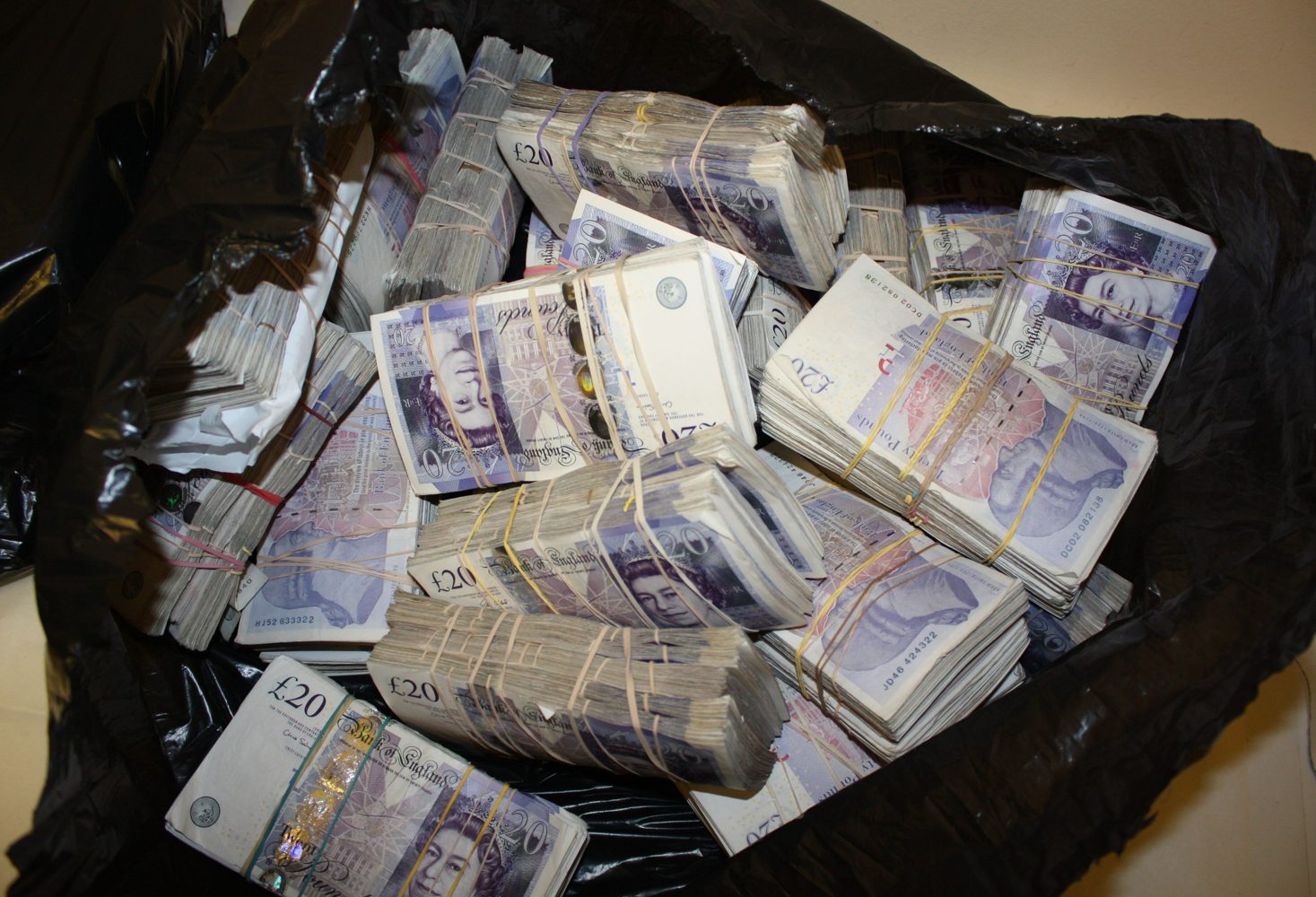
An extraordinary claim about hundreds of thousands of pounds hidden in supermarket bags raises questions about unexplained wealth, police investigations and the movement of cash. But the most surprising part may be what cannot be verified.
DUBLIN / LONDON — OCTOBER 2026
Imagine an ordinary police search revealing almost half a million pounds in cash.
Not inside a bank vault. Not in an armored vehicle. But reportedly packed into everyday Lidl shopping bags.
Now imagine a second twist: the man allegedly carrying the money is said to have been allowed to leave.
It sounds like the beginning of an extraordinary crime investigation.
But there is a problem.
The circulating claim that a man was arrested with £468,000 in Lidl shopping bags and subsequently released has not been established through independently verified reporting.
And the supposed connection to Ireland remains unclear.
Nevertheless, genuine police investigations involving extraordinary amounts of cash concealed in supermarket bags provide a fascinating look at how authorities trace suspicious money.
The Real Police Discovery Behind Similar Headlines
In July 2026, Metropolitan Police officers in south London made a remarkable discovery.
During an operation in Catford, officers stopped a vehicle and searched its driver, a 54-year-old man.
According to reports, approximately £35,000 in cash was initially recovered.
The man was arrested on suspicion of possessing criminal property.
Further searches at an address connected to him uncovered something much larger.
Police discovered approximately £4 million in cash hidden in shopping bags, including bags associated with Lidl and Sainsbury's.
Officers also recovered approximately one kilogram of cocaine.
The Metropolitan Police described the discovery as one of its largest cash seizures.
The reported total was far greater than the £468,000 mentioned in the circulating claim.
Available reports about the London operation also do not establish that the suspect was immediately released without further action.
Why Would Someone Keep So Much Money in Shopping Bags?
The discovery of substantial amounts of cash outside the banking system can attract law-enforcement attention.
Ordinary shopping bags are inexpensive, widely available and easy to transport.
Their appearance offers little indication of what may be concealed inside.
However, carrying large quantities of cash is not automatically a criminal offense.
There can be legitimate explanations for possessing cash, including business activities, asset sales or personal financial arrangements.
When police encounter unusually large sums, investigators may examine the source of the funds and whether the money is connected to criminal activity.
The circumstances surrounding the cash, rather than the shopping bags themselves, are crucial.
Does an Arrest Mean Someone Is Guilty?
An arrest is not a conviction.
Police may arrest someone when the applicable legal conditions are met, including circumstances involving reasonable suspicion of an offense.
Investigators may then question the person, examine evidence and determine whether further legal action is appropriate.
A person can sometimes be released while an investigation continues.
In other situations, property may remain seized even when the person possessing it is no longer detained.
Therefore, a claim that police released a suspect would not, by itself, establish that the money was legitimate or that the investigation had ended.
Likewise, possession of an unusually large amount of cash does not establish criminal guilt.
What Does Any of This Have to Do With Ireland?
The direct connection between the alleged £468,000 incident and Ireland has not been verified.
However, Ireland has its own experience with investigations involving unexplained wealth and suspected criminal proceeds.
The country's Criminal Assets Bureau, commonly known as CAB, works with other state agencies to identify and investigate assets suspected of deriving from criminal activity.
Its work can involve cash, property, vehicles, financial records and other valuable assets.
The bureau's activities illustrate why authorities increasingly examine not only suspected offenses but also the financial benefits that may be associated with them.
Ireland's close economic connections with the United Kingdom and wider Europe also make cross-border financial investigations an important law-enforcement issue.
But those general connections should not be mistaken for evidence that the alleged £468,000 incident involved an Irish individual, company or organization.
Ireland Has Seen Its Own Major Cash Seizures
In January 2023, Ireland's Criminal Assets Bureau conducted searches at 15 locations across Dublin, Meath, Louth and Cork.
The operation formed part of an investigation into suspected organized crime and money laundering through property investments.
Investigators seized more than €20,000 and £14,600 in cash, along with luxury watches, designer handbags and electronic devices.
One man was arrested during the operation.
The case demonstrates how financial investigations can extend beyond bank accounts and include valuable physical possessions.
Such operations may involve extensive cooperation between investigators, financial specialists and other authorities.
Another Lidl Bag Discovery Reached a British Court
The London case was not the only investigation involving money stored in supermarket bags.
In August 2024, a court in Glasgow heard evidence about approximately £1.15 million in cash discovered during a police search at a property in Robroyston.
According to reporting from the trial, £996,060 was found in sealed packages placed inside four Lidl bags.
The evidence formed part of proceedings concerning an alleged international cocaine-trafficking operation.
The discovery demonstrates that seemingly ordinary objects can become significant evidence in complex investigations.
However, it was a separate case and should not be confused with the unverified £468,000 claim.
Why Investigators Follow the Money
Financial investigations often focus on where money came from, how it moved and who controls it.
Investigators may examine business transactions, property purchases, financial records and relationships between individuals or organizations.
Large quantities of unexplained cash can be relevant because certain criminal enterprises operate outside ordinary banking channels.
But careful investigation is necessary to distinguish illicit proceeds from legitimately held funds.
In cross-border cases, authorities may need to cooperate across jurisdictions and examine transactions involving multiple currencies.
Such work can be complex and time-consuming.
Could the Mystery Have a Simple Explanation?
Sensational headlines sometimes combine elements from several unrelated incidents.
A reported cash seizure may be confused with a different arrest.
Figures may be converted between currencies or incorrectly repeated.
Details about release from custody may also be presented without the necessary legal context.
In the case of the alleged £468,000 discovery, the missing information is significant.
Without an identified location, incident date, police statement or reliable court record, it is impossible to establish what actually happened.
There is also no verified evidence explaining why Ireland would be directly involved.
What Should Readers Watch For?
If further evidence emerges, several details would help establish whether the story is genuine.
An official police statement could clarify the amount seized and the circumstances of the arrest.
Court records might explain whether charges were brought.
Reliable reporting could establish whether the suspect was released and whether an investigation remained open.
Finally, documentary evidence would be needed to demonstrate any connection to Ireland.
Until those details become available, the dramatic claim should remain unconfirmed.
Conclusion: The Real Mystery Is What Can Be Proven
The idea of a man carrying £468,000 in Lidl shopping bags and walking free after police intervention is undeniably attention-grabbing.
But extraordinary stories require reliable evidence.
Documented police investigations in London and Glasgow show that authorities have discovered substantial amounts of cash concealed in ordinary supermarket bags.
Ireland's own Criminal Assets Bureau demonstrates the importance of examining suspicious assets and tracing potential proceeds of crime.
Yet none of these facts confirms the specific £468,000 story or establishes a direct Irish connection.
The most important question is not why someone was allegedly released with almost half a million pounds in shopping bags. It is whether the reported incident happened as described in the first place.
Until that question is answered, the distinction between verified facts and an intriguing headline remains essential.
Thomas Brown is a sports and documentary photographer based in Newport, Shropshire, with an MA in Photojournalism & Documentary Photography from the University of the Arts London. Get in touch about a fixture, a tournament or a commission.