US–EU Tariff War 2026: The Global Trade Order Is Changing as Europe Faces a New Economic Challenge
Washington and Brussels are entering another period of uncertainty. New disagreements over industrial support, tariffs and global competition are raising questions about the future of one of the world's most important economic partnerships.
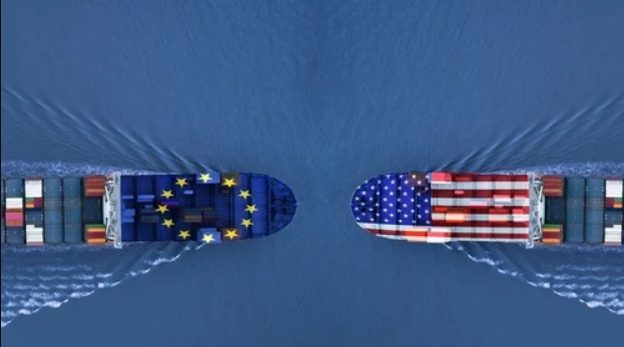
Washington and Brussels are entering another period of uncertainty. New disagreements over industrial support, tariffs and global competition are raising questions about the future of one of the world's most important economic partnerships.
BRUSSELS / WASHINGTON — OCTOBER 27, 2026
The global economic order is undergoing a major transformation.
International trade rules are changing, governments are reconsidering their industrial strategies, and the relationship between the United States and the European Union is facing renewed pressure.
After a turbulent period of negotiations and tariff disputes, Washington and Brussels reached an agreement intended to stabilize transatlantic commerce.
But the latest developments suggest that the economic relationship between the two powers remains fragile.
A new disagreement involving European aerospace manufacturer Airbus has raised concerns that tensions could return.
At the center of this changing landscape are US President Donald Trump and European Commission President Ursula von der Leyen, whose trade negotiations have helped define a new chapter in transatlantic relations.
The question now is whether the world's largest trading partners can maintain their agreement—or whether a new phase of economic confrontation is approaching.
A New Dispute Threatens the Trade Agreement
On October 27, 2026, new concerns emerged about the stability of the US–EU trade relationship.
US Trade Representative Jamieson Greer raised objections to a multibillion-dollar loan provided to European aircraft manufacturer Airbus by the European Investment Bank.
The financing, valued at approximately $3.4 billion, has become the latest source of disagreement between Washington and Brussels.
American officials have questioned whether the arrangement could distort competition within the global aerospace industry.
Airbus has defended the financing as a legitimate commercial arrangement supporting its international operations.
The development is particularly significant because the United States and Europe have spent years attempting to resolve disputes involving aircraft manufacturers.
Although the disagreement does not automatically mean a new trade war will begin, it highlights the continuing sensitivity of industrial support and international competition.
How the Tariff Conflict Began
The latest period of trade tensions intensified in 2025.
The Trump administration introduced extensive tariff measures designed to protect American industries and address what it considered unfair international trading practices.
The measures affected numerous trading partners, including countries within the European Union.
European businesses faced uncertainty over the cost of exporting products to the American market.
Industries such as automotive manufacturing, machinery, pharmaceuticals and metals were particularly concerned.
European leaders warned that an uncontrolled escalation could damage economic growth and disrupt international supply chains.
After months of negotiations, both sides reached a political understanding in July 2025.
The agreement was intended to reduce uncertainty and prevent the dispute from developing into a broader economic confrontation.
The Agreement That Changed Transatlantic Trade
On July 27, 2025, Donald Trump and Ursula von der Leyen announced a trade agreement in Turnberry, Scotland.
The framework was subsequently detailed in a joint statement published in August 2025.
One of its central elements was a US tariff ceiling of 15% on most European Union exports, subject to defined exceptions and sector-specific provisions.
In exchange, the European Union agreed to remove tariffs on American industrial goods and improve market access for selected agricultural products.
The arrangement represented a significant compromise.
For Washington, it supported the administration's efforts to restructure international trade relationships.
For Brussels, it offered a way to prevent additional economic uncertainty and maintain access to the American market.
Nevertheless, the agreement did not eliminate every disagreement.
Europe Takes a Decisive Step in 2026
A major development occurred in June 2026 when European institutions completed the legislative process required to implement key elements of the trade agreement.
The new EU tariff arrangements entered into force on July 1.
Under the measures, duties were eliminated on a wide range of American industrial products.
The changes covered categories including machinery, certain manufactured goods and other industrial imports.
The European Union also introduced preferential treatment for selected agricultural and seafood products.
European officials presented the legislation as an important step toward restoring stability in international commerce.
However, Brussels also established safeguards.
These mechanisms allow the EU to reconsider certain trade preferences if the United States fails to respect its commitments.
The approach demonstrates Europe's attempt to balance economic cooperation with protection of its strategic interests.
The Steel and Aluminium Problem Remains Unresolved
Despite the broader agreement, steel and aluminium remain among the most sensitive issues in transatlantic trade.
Certain metal products continue to face substantial US import duties.
Depending on the classification, tariffs can reach 50%.
These restrictions have created challenges for European producers and businesses operating international supply chains.
Steel and aluminium are important components in automotive manufacturing, construction, industrial equipment and infrastructure.
Higher import costs can influence production expenses and business competitiveness.
The European Union has established December 31, 2026, as an important deadline.
If the United States continues applying tariffs above the agreed 15% ceiling to relevant steel and aluminium derivative products, European authorities may suspend certain concessions.
This makes the final months of 2026 especially significant.
Why the Airbus Dispute Matters
The aerospace industry has long been a source of commercial rivalry between the United States and Europe.
American aircraft manufacturer Boeing and European competitor Airbus are two of the most influential companies in global aviation.
Disagreements over government support have previously resulted in years of legal challenges and retaliatory tariffs.
A trade truce reached in 2021 helped reduce tensions.
However, the latest concerns surrounding Airbus financing demonstrate that unresolved questions can reappear.
For the United States, the central issue is maintaining fair competition.
For Europe, the challenge is supporting industrial development while respecting international trade commitments.
Both sides have significant economic interests in avoiding another prolonged aerospace dispute.
A renewed confrontation could affect manufacturers, airlines, suppliers and workers across several countries.
The Global Economic Balance Is Shifting
The tariff conflict reflects a wider change in international economic relations.
For decades, globalization encouraged businesses to establish supply chains across multiple countries.
Companies sought efficient production, access to international markets and competitive manufacturing costs.
Today, governments are placing greater emphasis on economic security.
Critical technologies, energy supplies, semiconductors and strategic materials have become increasingly important.
The United States is promoting domestic industrial investment.
The European Union is seeking to strengthen its competitiveness while reducing vulnerabilities in key sectors.
These changes are influencing decisions made by multinational corporations.
Businesses must consider not only production costs but also tariffs, regulations and geopolitical uncertainty.
Could European Consumers Feel the Impact?
International trade disputes may seem distant from everyday life.
However, tariffs can influence the prices and availability of goods.
Import duties are generally paid by importing businesses.
Those companies may absorb the additional costs or pass some of them to customers.
The effects depend on competition, exchange rates, supply chains and consumer demand.
Products potentially affected by changes in trade policy include vehicles, industrial equipment, electronics and certain consumer goods.
For European households, higher business costs can sometimes contribute to price increases.
American consumers may face similar pressures when imported products become more expensive.
This is why economists pay close attention to prolonged tariff disputes.
Businesses Face a New Investment Dilemma
Trade uncertainty creates challenges for companies making long-term decisions.
A manufacturer considering a new factory must evaluate labor costs, energy prices, market access and regulatory conditions.
Unexpected tariffs can influence the profitability of such investments.
Some companies may diversify their suppliers.
Others may relocate parts of their production or expand operations in markets where they expect greater stability.
These adjustments can require substantial financing and time.
Small businesses may face particular difficulties because they generally have fewer resources to manage international disruptions.
For large multinational corporations, uncertainty can affect investment decisions across several regions.
Technology and Artificial Intelligence Enter the Trade Debate
The future of transatlantic commerce is increasingly connected to advanced technology.
Artificial intelligence, semiconductors, cloud computing and digital infrastructure are becoming central elements of economic competition.
Both American and European companies are investing heavily in these sectors.
The United States remains home to many leading AI technology providers.
Europe possesses important industrial capabilities, research institutions and specialized technology companies.
Future cooperation could create opportunities in advanced manufacturing, cybersecurity and computing infrastructure.
However, disagreements over digital regulation and international business practices could create additional tensions.
The challenge for policymakers is finding rules that support innovation while maintaining fair competition.
Is Europe Preparing for a New Economic Era?
European institutions are increasingly discussing competitiveness, strategic autonomy and industrial resilience.
These priorities reflect concerns about the continent's position in a rapidly changing global economy.
Europe remains a major international market, but businesses face competition from the United States, Asia and other regions.
Energy costs, investment conditions and technological development are important factors.
The evolving trade relationship with Washington adds another layer of complexity.
European policymakers must decide how to preserve valuable international partnerships while strengthening domestic economic capabilities.
The outcome could influence manufacturing, investment and employment across the continent.
What Happens Before the End of 2026?
Several developments will be important to watch.
The first is whether Washington and Brussels can resolve the latest disagreement involving Airbus financing.
The second is whether outstanding steel and aluminium tariff issues are addressed before the December deadline.
The third involves the broader implementation of the trade agreement.
Both sides will need to demonstrate that their commitments are being respected.
Economic conditions may also influence negotiations.
Businesses and consumers are watching how international trade decisions affect costs, investment and market confidence.
Although a renewed trade conflict is possible, continued cooperation remains an important alternative.
Conclusion: Is the World Entering a New Trade Order?
The US–EU tariff dispute of 2026 illustrates how quickly international economic relationships can evolve.
What began as a disagreement over customs duties has become part of a broader debate about industrial competitiveness, technological leadership and economic security.
The agreement reached by Donald Trump and Ursula von der Leyen established an important framework for cooperation.
However, the latest dispute involving Airbus and unresolved questions surrounding metals tariffs demonstrate that the relationship still faces challenges.
The global trade order is changing, and the decisions made in Washington and Brussels over the coming months could influence international markets for years to come.
The central question is whether both sides can transform a fragile compromise into lasting economic stability.
For businesses, workers and consumers across the Atlantic, the answer could have significant consequences.
Thomas Brown is a sports and documentary photographer based in Newport, Shropshire, with an MA in Photojournalism & Documentary Photography from the University of the Arts London. Get in touch about a fixture, a tournament or a commission.